Investigation 02: A Relationship That Never Started
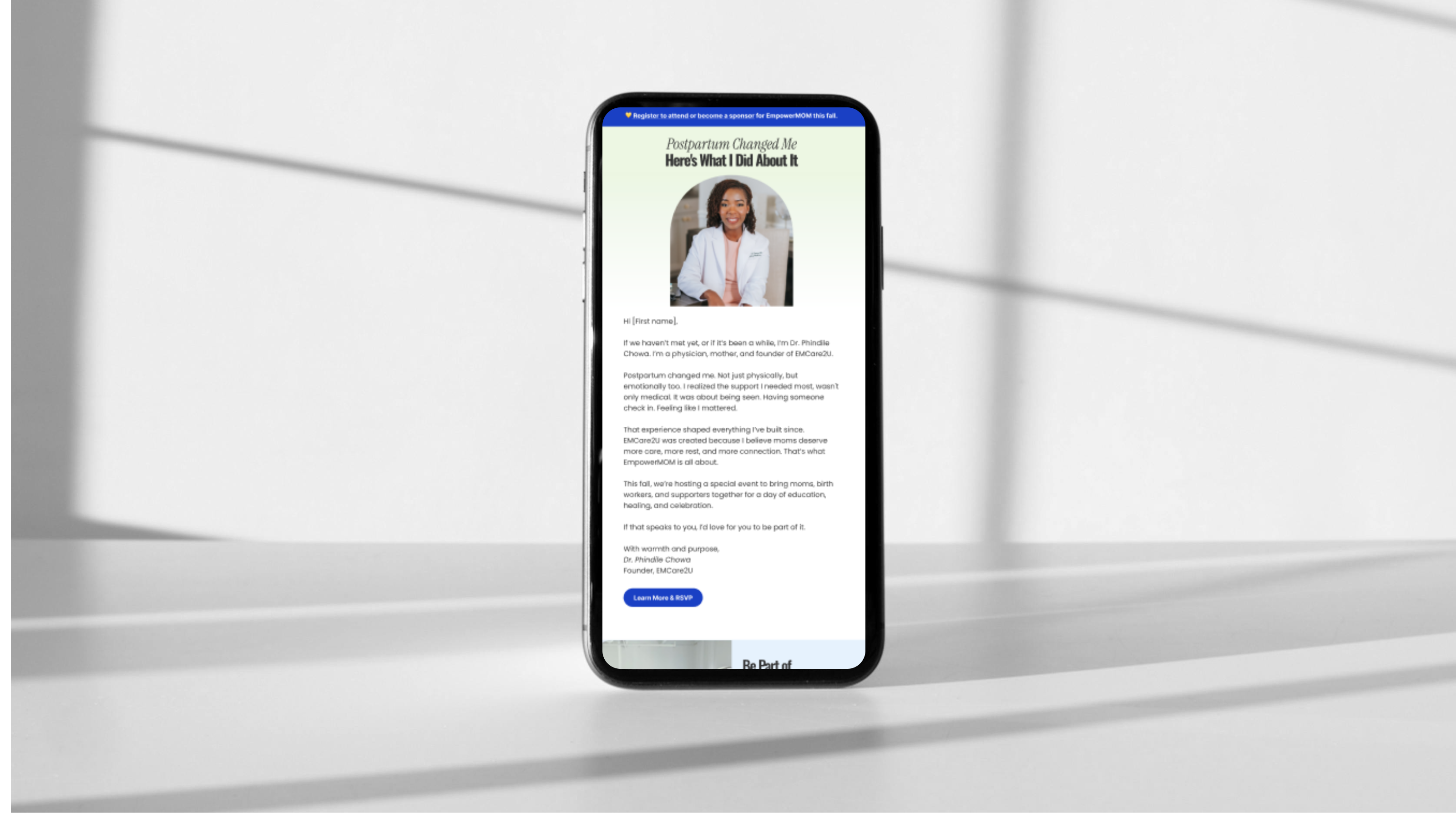
A campaign that started as a side effect of a data migration and ended up teaching me what “cold” actually means.
Project Overview | |
|---|---|
| Client | EMCARE 2U |
| Role | CX/Lifecycle Strategist & Implementer |
| Timeline | Jun 9 – Oct 1, 2025 |
| Tools | Figma · Whimsical · Airtable · Kit (ConvertKit) |
| Scope | Lifecycle architecture, audience segmentation, messaging strategy, CRM implementation |
Observation
The client described her email program in a way that immediately made sense.
"We're just sending things."
She had started with newsletters, kept going, and somewhere along the way the emails became routine instead of intentional. New subscribers entered through events, referrals, and the website, then received essentially the same emails as everyone else. There was no welcome sequence, no clear journey, and no shared understanding of what someone should experience after joining the list.
It was obviously a systems problem.
What I didn't know yet was whether fixing the system would be enough.
The Question
The obvious question was whether a better lifecycle would improve engagement.
If people were receiving the same newsletters regardless of how they joined the list, then introducing audience segments, journey stages, and a structured sequence seemed like the logical solution.
Would building a better system change the way people responded?
Hypothesis
My instinct was yes.
I believed the list had outgrown its structure. If subscribers received messages that reflected where they were in their journey instead of generic newsletters, engagement should improve.
The plan was straightforward: organize the audience, build a lifecycle, and replace isolated campaigns with a sequence that had a clear purpose.
Investigation
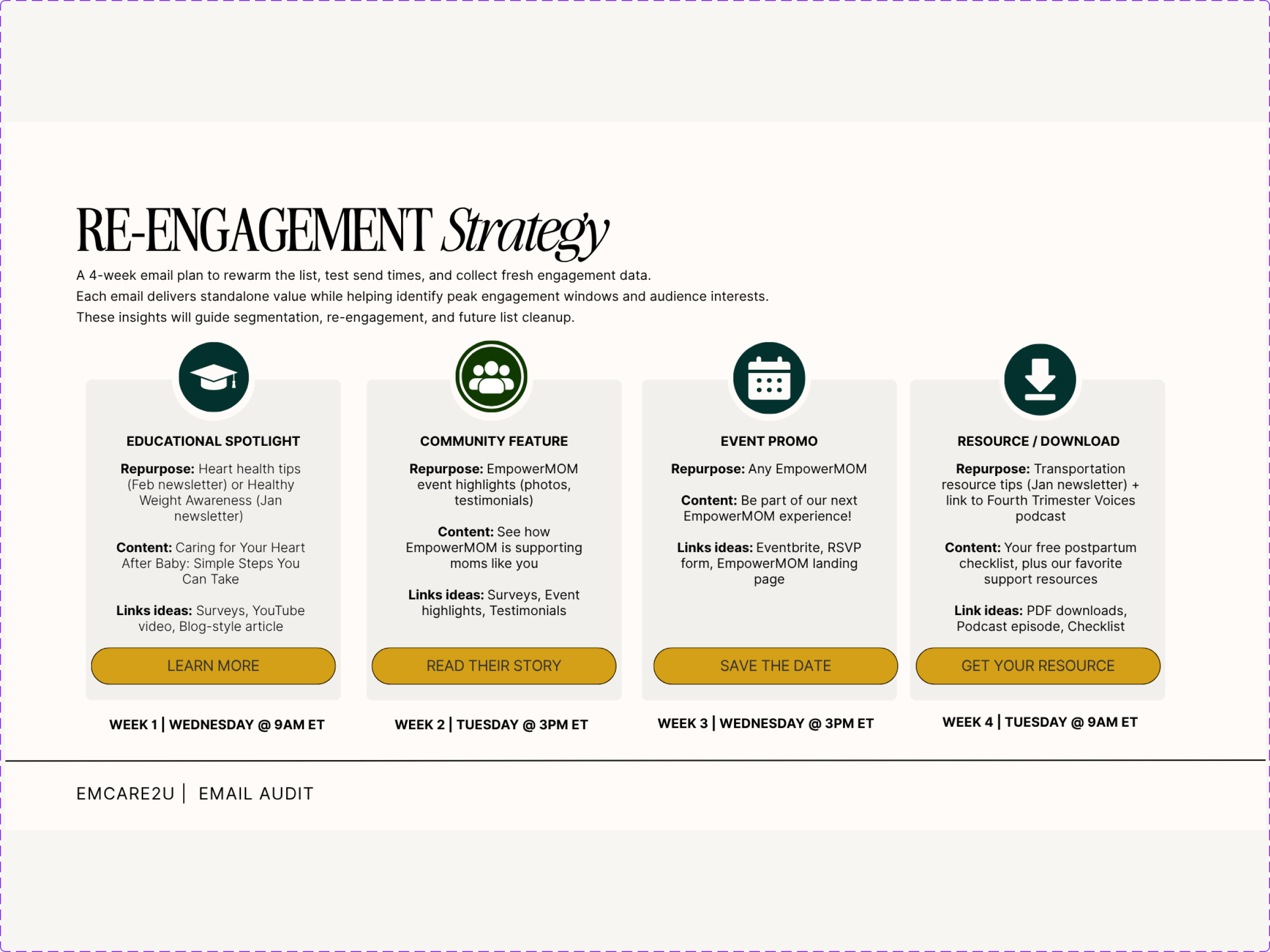
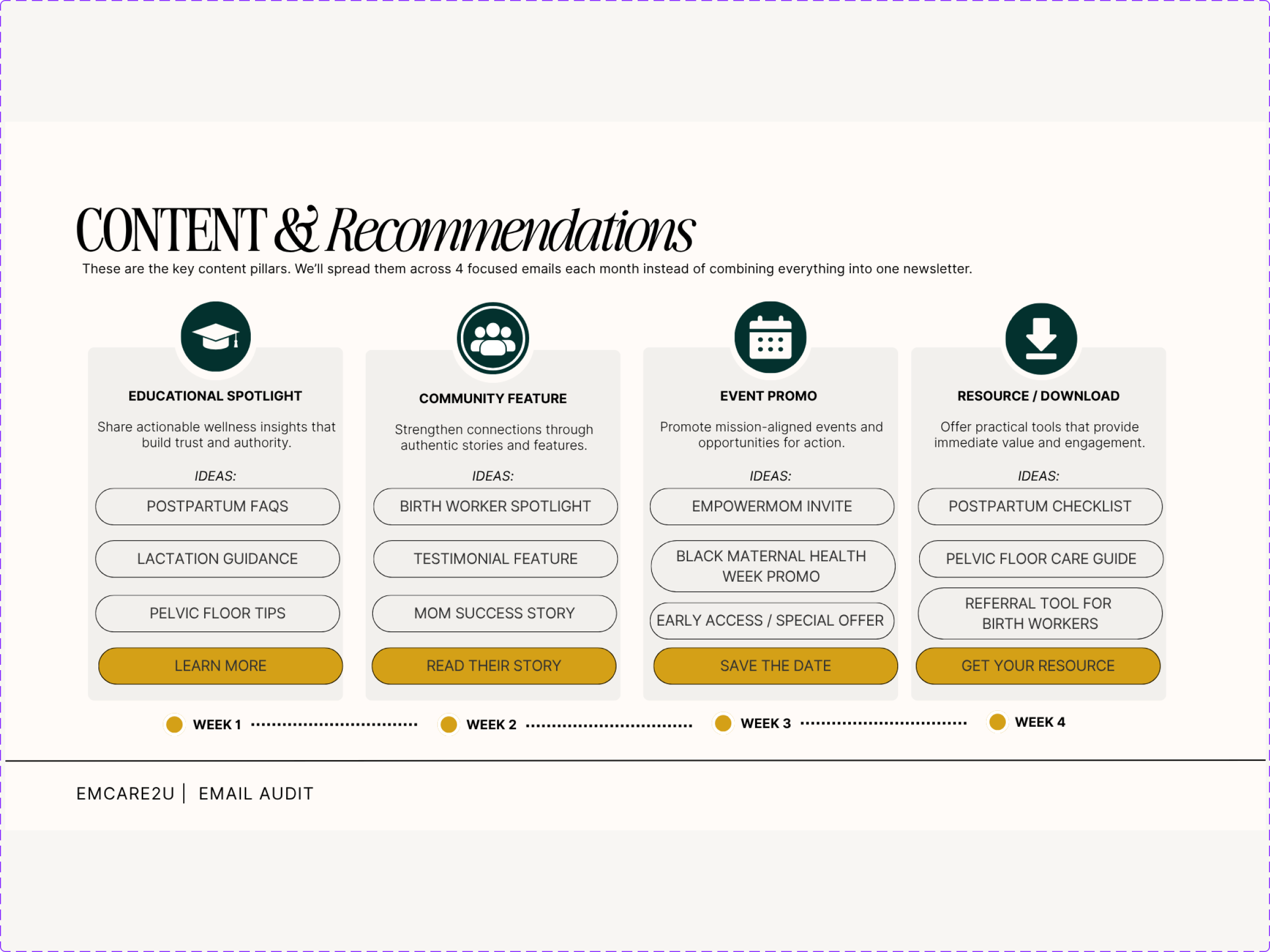
The audit covered seven months of campaign history, and it largely confirmed that assumption. Subscribers were spread across overlapping lists with no consistent logic. Audience sizes changed dramatically from one campaign to the next, and many emails asked readers to attend an event or make a purchase before giving them much reason to care. The structure had grown organically over time, but it hadn't grown intentionally.
I rebuilt it around four dimensions: audience, journey stage, behavior, and interests. From there, I designed a four-email reactivation sequence that introduced one clear objective per email instead of combining multiple requests into every send.
At that point, I thought I understood the problem.
While writing the first email, I proposed two subject-line directions. One simply introduced the content. The other opened with the client's personal postpartum story. Both emails belonged to the same sequence. They reached the same audience at the same point in the journey. The only meaningful difference was how much of the person behind the business came through before the email was even opened.
The personal version won by a wide margin.
That result made me stop and rethink my original assumption. Nothing about the lifecycle had changed. Nothing about the audience had changed. The only thing that changed was the relationship. It made me realize that many people on the list had never really been introduced to the person sending the emails. They had been invited to events, encouraged to purchase services, and asked to stay engaged before they had ever been given much reason to trust the person asking.
The sequence solved when an email should be sent and who should receive it. It didn't solve why someone should care.
Findings
The reactivation sequence performed consistently across all four emails, with open rates between 37% and 46% while unsubscribe rates remained below 0.3%.
| Metric | Outcome |
|---|---|
| Average Open Rate | 40.6% |
| Highest Open Rate | 46.2% |
| Unsubscribe Rate | <0.3% |
| Event Registrations | 25 → 184 |
The clearest finding came from the subject-line test. The more personal version significantly outperformed the more informational version, becoming the strongest-performing email in the sequence.
I expected the biggest improvement to come from better organization. Instead, it came from making the relationship feel more human.
The broader business results pointed in the same direction. EmpowerMOM attendance remained relatively flat before the sequence was introduced, then increased substantially while the new lifecycle was live. I can't attribute that change to email alone, and I don't try to. But the timing suggested that introducing people to the person behind the business before asking them to take action changed something meaningful about how they responded.
What Changed My Thinking
I started this project believing that structure creates engagement. I still believe structure matters. But now I think of it as the beginning of the relationship, not the relationship itself.
A well-designed lifecycle determines who receives a message and when they receive it. It doesn't automatically create trust. That has to be earned, and sometimes it starts with something as simple as allowing a real person to show up instead of another polished piece of marketing.
Since then, I've approached every audit with two questions instead of one. I still look for missing journeys, weak segmentation, and broken systems. But I also ask whether the audience has ever been given a reason to know the person behind the message.
Sometimes the system is broken.
Sometimes the relationship never started.
And that leaves me with the question I still carry into every project: If someone joined your audience months ago but never really met you, what would it take to earn their trust today?